
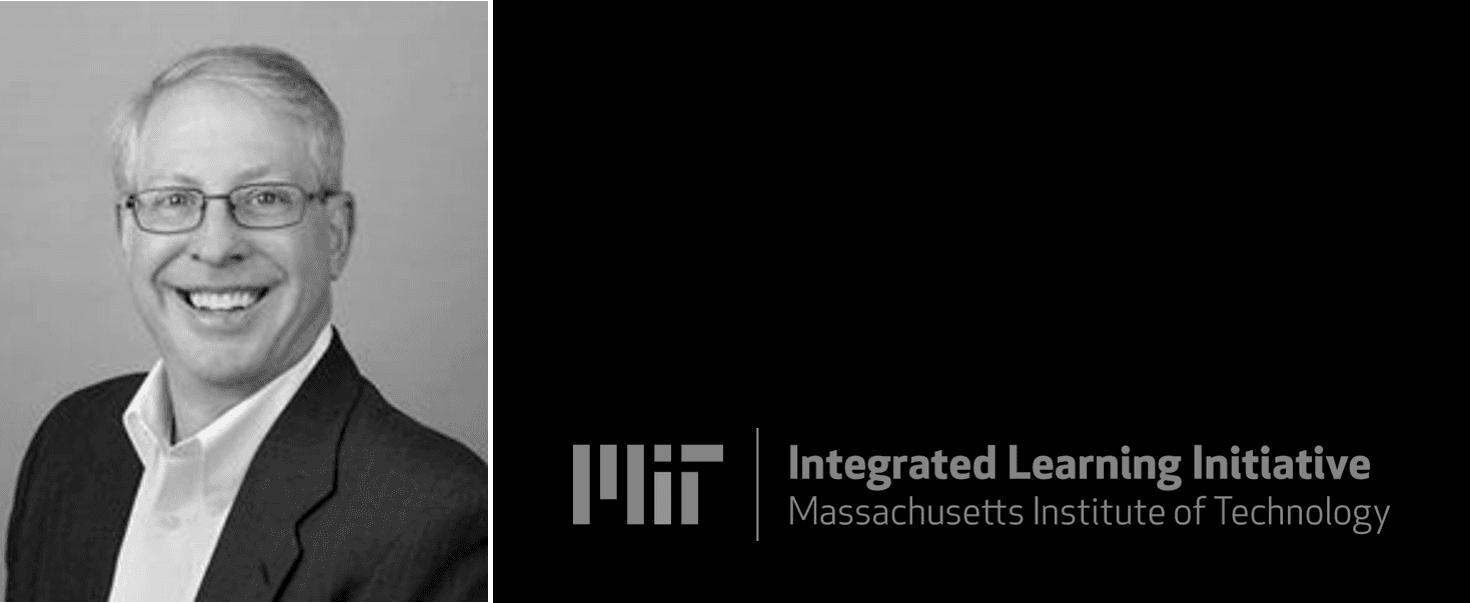
Everyone is talking about Generative AI, but few leaders know exactly how to fit it into their existing strategy without causing chaos. In a recent talk for MIT Corporate Relations, Dr. George Westerman (Principal Research Scientist at MIT Sloan) cut through the hype to offer a practical management framework for AI. Here is the 4-minute summary of his guide to navigating the AI revolution.
3 min
1. Remember "Westerman’s Law"
Before buying the latest software, Westerman proposes a fundamental rule of digital transformation:
"Technology changes quickly, but organizations change much more slowly."
The technology itself is rarely the problem. The bottleneck is almost always transformation—changing your processes, culture, and leadership to actually use the tech. Value comes from how you change your business, not the tool you buy.
2. Don’t Use a Chainsaw to Cut Butter
Westerman emphasizes that "Artificial Intelligence is not intelligent." It is a formula. To get value, you must match the right type of AI to your specific problem:
Rule-Based Systems: Best for strict logic and compliance (e.g., "If X, then Y").
Econometrics (Statistics): Best for finding trends in numeric data.
Deep Learning: Best for pattern matching (e.g., image recognition), but hard to explain why it made a decision.
Generative AI: Best for creating new content (text, code, images).
The Takeaway: If you need a precise, explainable answer (like why a loan was denied), GenAI might be the wrong tool. Start with the problem, then pick the tech.
3. Stop Waiting for the "Big T" Transformation
Many companies are frozen, waiting to launch a massive "Big T" Transformation—a complete overhaul of their business model.
Westerman suggests you are better off focusing on "little t" transformations right now. These build your organizational "muscle" for the future:
Individual Productivity: Use AI to summarize meetings or draft code.
Task Specialization: Use AI to act as a "tutor" for junior employees or a "co-pilot" for sales agents.
Process Efficiency: Automate the boring parts of a workflow so humans can focus on the complex parts.
Accumulating these small wins is how you prepare for the big shifts later.
4. The "Lug Nut" Theory of Implementation
How do you implement AI without breaking your company? Westerman uses a car mechanic analogy: Changing a tire.
If you tighten one lug nut all the way down while the others are loose, you will bend the wheel. You have to tighten them all a little bit at a time, in a circle.
Treat AI the same way:
Start small in multiple areas.
Learn from the failures and successes.
Tighten the bolts (increase investment and risk) only as your capability grows.
5. Culture is Your Safety Net
If your employees fear AI will replace them, they will fight it. You need to reframe the narrative from Replacement to Augmentation.
Reduce Cognitive Load: Show employees how AI removes the "boring" work so they can focus on strategy and creativity.
Encourage "Office Hours": Create spaces where employees can share their own prompt hacks and discoveries.
Upskill Continuously: Help your team develop "human skills"—critical thinking, leadership, and emotional intelligence—that AI cannot replicate.
The Bottom Line: Just Start
Westerman’s final advice? Get started now.
You don't need a perfect roadmap to begin. By experimenting with "little t" transformations and treating AI as a leadership challenge rather than a tech installation, you can build the agility required to win in the next decade.
